Transformative Cities – the role of contemporary urban water management


Event Synopsis
|
Climate change poses one of the greatest challenges of our time. Following the 2023 SDG Summit, the UN General Assembly affirmed that mitigation of, and adaptation to, climate change is an immediate and urgent priority. Cities and towns are constantly evolving social-technical ecosystems. Many global challenges converge in cities, and their impacts amplified. We cannot ignore the interconnections and interplay of these challenges and impacts.
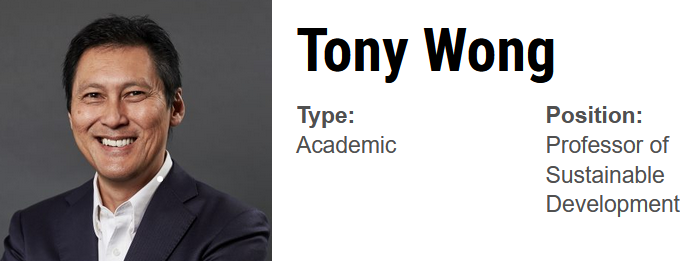
Water is integral to many urban forms and is a powerful enabler of urban liveability, sustainability, productivity, and resilience. Climate change impacts often manifest through water-related extreme events of floods, droughts and environment degradation, and their consequential impacts on public health, food security and local economies. We witnessed in 2023 the devastation of these climate impacts globally, set within the context of record-breaking global temperature. Cities of the future could be serviced by hybrid systems that combine critical existing infrastructure with flexible decentralised local solutions. They merge conventional engineering with nature-based solutions and integrate urban systems for energy, waste, transport, housing and food. They are co-created with community and delivered through private-public or whole-of-government co-investment schemes. Their governance is also a hybrid of government and community participation. Digital technologies for real time controls and the internet-of-things bring new opportunities for new circular economies in water and their nexus with energy, waste, and food. These systems are supported by new business and investment models to create Transformative Cities that have the underlying social, technical and institutional infrastructure, and the drive and capability to keep innovating and adapting as circumstances change. Lecture By Tony Wong Tony Wong is Professor of Sustainable Development at Monash University, Fellow of the Australian Academy of Technology and Engineering (FTSE) and 2018 IWA Global Water laureate. With over 30 years professional experience, he is internationally recognised for his research and practice in sustainable urban water management, particularly water sensitive urban design. His expertise has been gained through national and international consulting, research, and academia partnerships. He has led a large number of award-winning urban design projects in Australia and overseas based around the bio-mimicry adaptation of nature-based solutions for water. He was presented by the Institution of Engineers, Australia the John Holland Award as Civil Engineer of the year in 2010 and commended for having defined “a new paradigm for design of urban environments that blends creativity with technical and scientific rigour”. Professor Wong provides strategic advice to governments and industry on urban water management nationally and internationally. He is on the Asian Development Bank panel of specialists advising on projects mainstreaming water resilience in Asia and the Pacific. He previously served on the (Australia) Prime Minister’s Science Engineering and Innovation Council’s working group on Water for Cities in 2006 and 2007, at the height of the country’s millennium drought. |
Galleries